
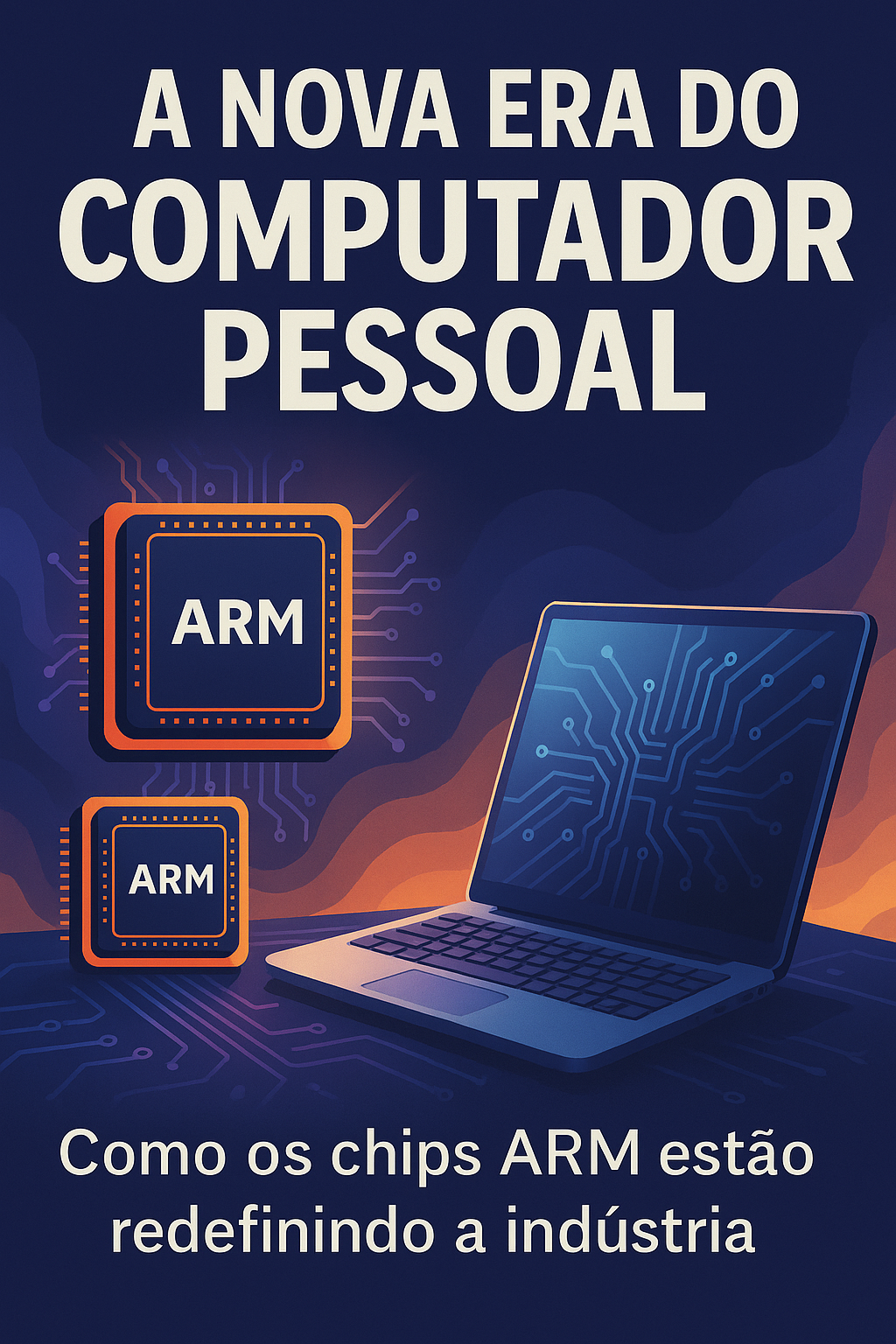
With the advancement of the ARM architecture, companies like Apple and Qualcomm are transforming what we understand by performance, efficiency, and mobility in PCs.
A silent revolution is underway
Over the past two years, a movement has been gaining momentum behind the scenes in the technology industry: the rise of the ARM architecture in the personal computer market. Until recently, the x86 architecture (Intel and AMD) held absolute dominance. However, with the arrival of Apple Silicon chips (M1, M2, and now M4) and Qualcomm's aggressive entry with the Snapdragon X Elite line, this paradigm is rapidly changing. And this shift isn't just technical—it's redefining the entire digital ecosystem.
What makes the ARM architecture so special?
Simply put, ARM chips are designed for extreme energy efficiency. Unlike traditional processors, which prioritize raw performance, ARM chips aim to deliver high power with lower consumption. That's why they were initially adopted in smartphones. However, Apple showed the world that this architecture can, indeed, dominate desktops and laptops, with real performance-per-watt gains. This opened the door to a new generation of thinner, lighter, quieter—and still powerful—devices.
Apple, Qualcomm, and the Race for Extreme Mobility
Apple is leading this movement with its line of proprietary chips, custom-built for its products. The result is a fine-tuned ecosystem, with impressive gains in speed, graphics, and battery life. Qualcomm, on the other hand, hasn't been left behind: in 2025, it introduced the Snapdragon X Elite—an ARM processor for Windows notebooks that directly challenges Apple's M3 processors in power and integrated AI benchmarks. Thus, the competition heats up not only in performance but also in user experience.
A transformation with global implications
Beyond the practical benefits, this technological shift generates ripple effects. Software manufacturers must adapt their systems. Developers are forced to recompile their apps. Operating systems like Windows and Linux must deal with multiple architectures. However, these transitional pains also create opportunities—especially for companies and entrepreneurs who seize the moment to innovate based on efficiency, mobility, and customization.
The impact for startups and product creators
For those developing MVPs, this transition is a game-changer. An ARM-based system can be lighter, more responsive, and more cost-effective—ideal for projects that require scalability and low operating costs. Furthermore, many ARM chips now come with dedicated AI modules, opening up new possibilities for embedded intelligence, even in compact devices. In other words, creating more powerful solutions with less power consumption becomes a competitive advantage.
Challenges still exist — and they are relevant
Of course, not everything is rosy. Legacy application compatibility is still a challenge, especially in the Windows ecosystem. Some platforms require emulation, which reduces performance. Therefore, companies adopting ARM must carefully analyze their workflows and tools before migrating. Even so, the movement is irreversible: major players are redesigning their products for this new reality.
Are we facing the future of personal computing?
The answer seems to be yes. The growing adoption of ARM chips in notebooks, desktops, and even servers points to a future where performance and efficiency are not opposites, but complementary. In a world where AI, mobility, and sustainability go hand in hand, optimized architectures like ARM become key components for technological advancement in the coming decades.
Time to update your technology vision
🚀 At Lymity, we closely monitor this evolution and help companies develop products ready for the new technological cycle. Whether it's ARM-optimized MVPs or embedded AI-ready systems, we offer tailored solutions to help you stay ahead of the curve.
💬 What do you think about this new architecture dominating computers? Comment below and share your thoughts.